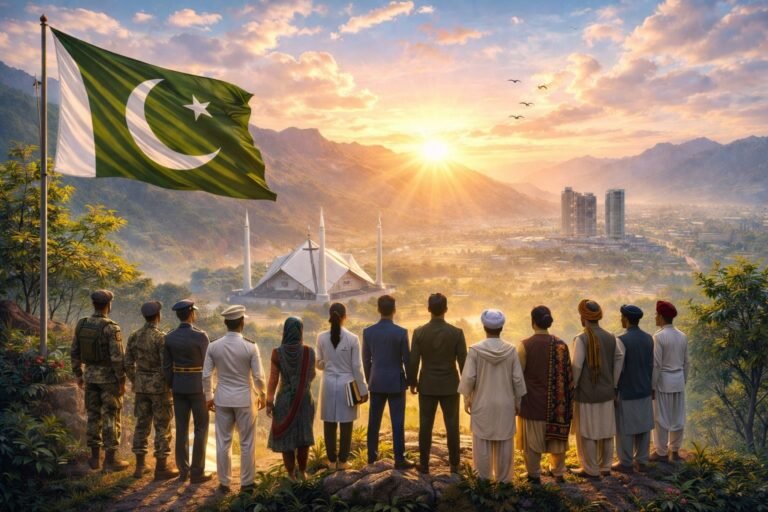
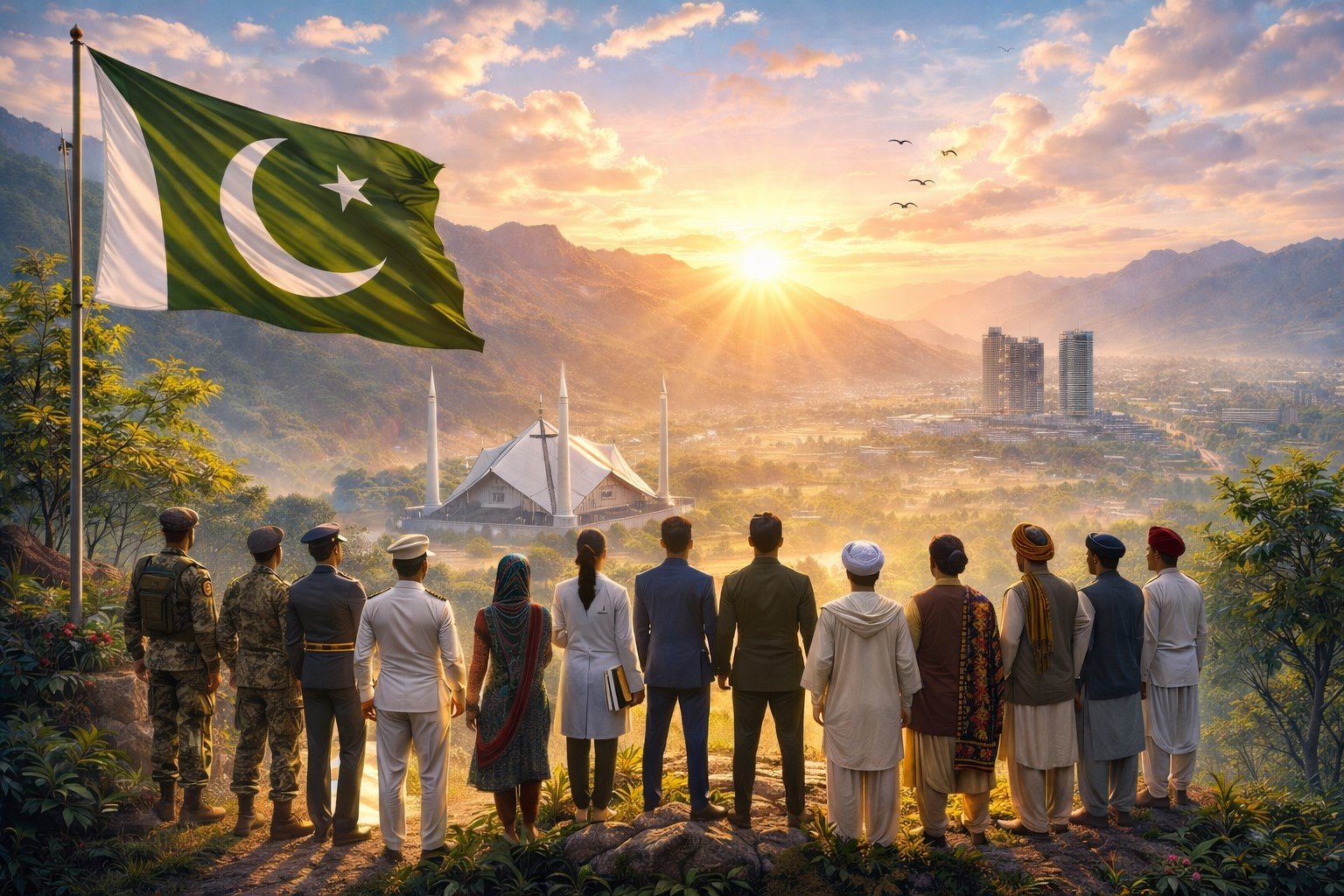
History does not judge nations by the storms they face, but by the strength with which they endure them. The story of Pakistan is not one of uninterrupted ease; it is the story of a state born in turbulence, tested repeatedly in moments of dusk, yet determined—time and again—to emerge into dawn.
When Pakistan came into existence on 14 August 1947, it inherited not the machinery of a stable state, but the fragments of a divided subcontinent. Administrative infrastructure was minimal. Financial assets were disproportionately retained by the larger successor state. Military hardware was unevenly distributed. The new country faced an immediate and unprecedented influx of millions of refugees fleeing communal violence. The early years were defined by scarcity, institutional fragility, and the enormous task of state-building under pressure.
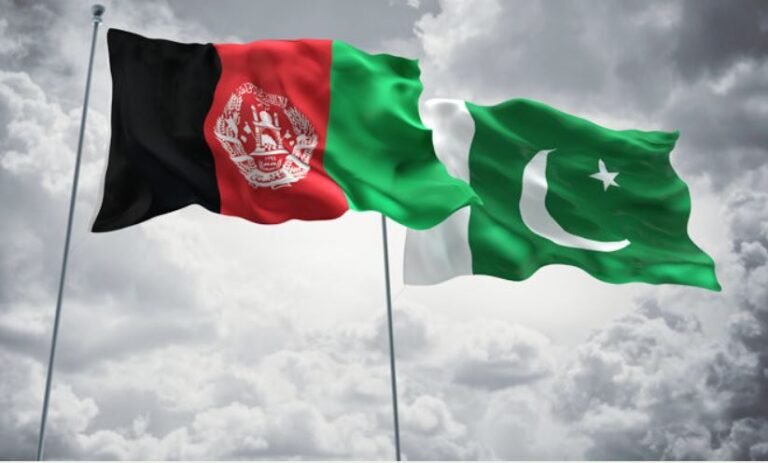
Beyond internal constraints, Pakistan’s external environment was fraught from inception. The unresolved status of Jammu and Kashmir led to the first armed conflict between Pakistan and India in 1948, embedding a territorial dispute into the strategic DNA of South Asia. For decades thereafter, Pakistan’s security calculus would remain shaped by a persistent imbalance in conventional capabilities and recurring crises with its eastern neighbor.
Yet even in those early years of administrative weakness and financial constraint, Pakistan did not retreat into isolation. Instead, it sought relevance through alignment. During the 1950s, Pakistan joined the Southeast Asia Treaty Organization (SEATO) in 1954 and the Central Treaty Organization (CENTO) in 1955. These alliances reflected more than Cold War alignment; they were strategic instruments designed to secure military modernization, economic support, and geopolitical recognition.
Through its partnership with the United States during this era, Pakistan’s armed forces underwent significant modernization. Advanced training, equipment transfers, and strategic cooperation elevated Pakistan’s military capacity relative to its limited economic base. Geography became leverage: positioned at the crossroads of South Asia, Central Asia, and the Middle East, Pakistan transformed its location into strategic currency.
The 1965 war further reinforced the reality that Pakistan would operate in a permanently contested security environment. In 1971, the secession of East Pakistan and the creation of Bangladesh marked perhaps the deepest national dusk—a moment of existential reckoning. Yet even that profound rupture did not extinguish the state’s cohesion. Instead, it prompted recalibration, reconstruction, and institutional restructuring.
The decades that followed were marked by recurring crises. The 1986–87 Brasstacks crisis exposed the fragility of deterrence during large-scale military exercises near the border. The 1999 Kargil conflict and the 2001–02 military standoff once again underscored how quickly escalation could occur in South Asia’s nuclearized environment. Episodes such as the Uri (2016) and Pulwama (2019) incidents further deepened mistrust and heightened regional tensions.
Throughout these cycles, Pakistan confronted what it perceived as a persistent conventional asymmetry and strategic pressure. Yet rather than collapse under this weight, it invested in deterrence stability, strategic doctrine refinement, and diplomatic engagement. The development of credible minimum deterrence in the late 1990s fundamentally altered the security architecture of South Asia, reducing the probability of large-scale war despite continued crises.
Pakistan’s endurance was not confined to the military domain. Economically and diplomatically, the country navigated sanctions regimes, shifting alliances, and global realignments. From its role as a frontline state during the Cold War to its centrality in post-9/11 counterterrorism dynamics, Pakistan repeatedly found itself at the center of global geopolitical currents.
The twenty-first century brought new challenges—terrorism, economic volatility, governance reforms—but also new opportunities. The launch of the China-Pakistan Economic Corridor (CPEC) in 2015 redefined Pakistan’s connectivity potential. Its ports, highways, and energy projects repositioned the country as a bridge between western China, Central Asia, and the Arabian Sea. Connectivity, rather than conflict, began to shape the narrative of strategic relevance.
Simultaneously, Pakistan diversified its diplomatic portfolio. Engagement expanded beyond traditional alliances to include strengthened ties with Turkey, Azerbaijan, Gulf states, Russia, and renewed institutional dialogue with the United States and Europe. Labor mobility agreements, energy partnerships, industrial projects, and defense collaborations reflected a more economically centered diplomacy.
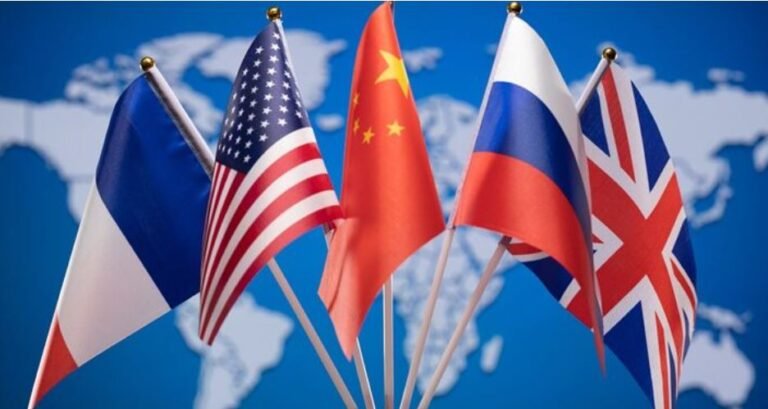
In June 2024, Pakistan secured 182 votes in the United Nations General Assembly to assume a non-permanent seat on the UN Security Council for the 2025–26 term—an overwhelming endorsement from the international community. Beyond membership, Pakistan has been appointed Chair of the UNSC 1988 (Taliban) Sanctions Committee for 2025, and Vice Chair of the UNSC 1373 Counter-Terrorism Committee for 2025, along with Russia and France. These responsibilities are not symbolic; they signify trust in Pakistan’s institutional maturity and diplomatic capacity.
Such developments indicate a broader transformation. Pakistan increasingly behaves not as a peripheral actor reacting to events, but as a middle power shaping regional conversations. Its diplomacy reflects balance rather than bloc dependence. It maintains deep strategic ties with China, sustains engagement with the United States, strengthens economic partnerships with Gulf countries, and enhances cooperation with emerging Eurasian actors.
The resilience narrative is therefore not rhetorical—it is structural. A state born amid administrative scarcity and mass displacement has built nuclear deterrence stability, diversified alliances, expanded its economic corridors, and assumed leadership roles in multilateral forums. It has faced wars (1948, 1965, 1971, 1999, 2025), crises (1987, 2002, 2019), sanctions, terrorism, and economic downturns. Yet at each juncture of dusk, it adapted rather than disintegrated.
Today, Pakistan’s strategic identity resembles that of a classic middle power: regionally consequential, diplomatically agile, security-conscious, and economically recalibrating. Its geographic position—once seen merely as vulnerability—now functions as connective advantage linking South Asia, Central Asia, the Middle East, and Western China.
The journey from 1947 to the present has not been linear. It has been turbulent, interrupted, and at times painful. But the arc of the narrative is unmistakable. Pakistan has neither vanished under external pressure nor fractured beyond repair under internal strain. Instead, it has absorbed shocks, redefined strategy, and reasserted relevance.
Rising high and ruling the skies has become the hallmark of Pakistan’s strength. The trajectory of rejuvenation outshone its rival during three and a half unforgettable days in May 2025. The aftermath firmly established that it is now the Pakistan Air Force — and not the Indian Air Force — that stands as the dominant air power in South Asia. Indeed, as the timeless Qur’anic assurance reminds us, “After hardship comes ease [94:6].” Pakistan’s trajectory from crisis to consolidation embodies this enduring principle.
From partition’s chaos to multilateral leadership; from refugee camps to industrial corridors; from early institutional fragility to diplomatic diversification; from constrained beginnings to consolidated power — the story is not of perpetual dusk. It is of rejuvenation.
And in the language of statecraft, rejuvenation is the truest sign of strength.
About the Author:
Dr. Tauqeer Hussain Sargana is the Advisor (Research & Organisational Planning) of the Regional Insights Forum (RIF).
Disclaimer:
The views expressed in this article are solely those of the author and do not necessarily reflect the official position or policy of the Regional Insights Forum (RIF).